Evergreen candytuft
Iberis sempervirens
Complete care guide for evergreen candytuft: full sun, well-draining soil, moderate watering, and annual post-bloom pruning for vibrant white flowers.
- Light
- 6 hof direct sun
- Temperature
- 12–24 °Cideal temperature
- Toxicity
- Non-toxic
- Difficulty
- Easy
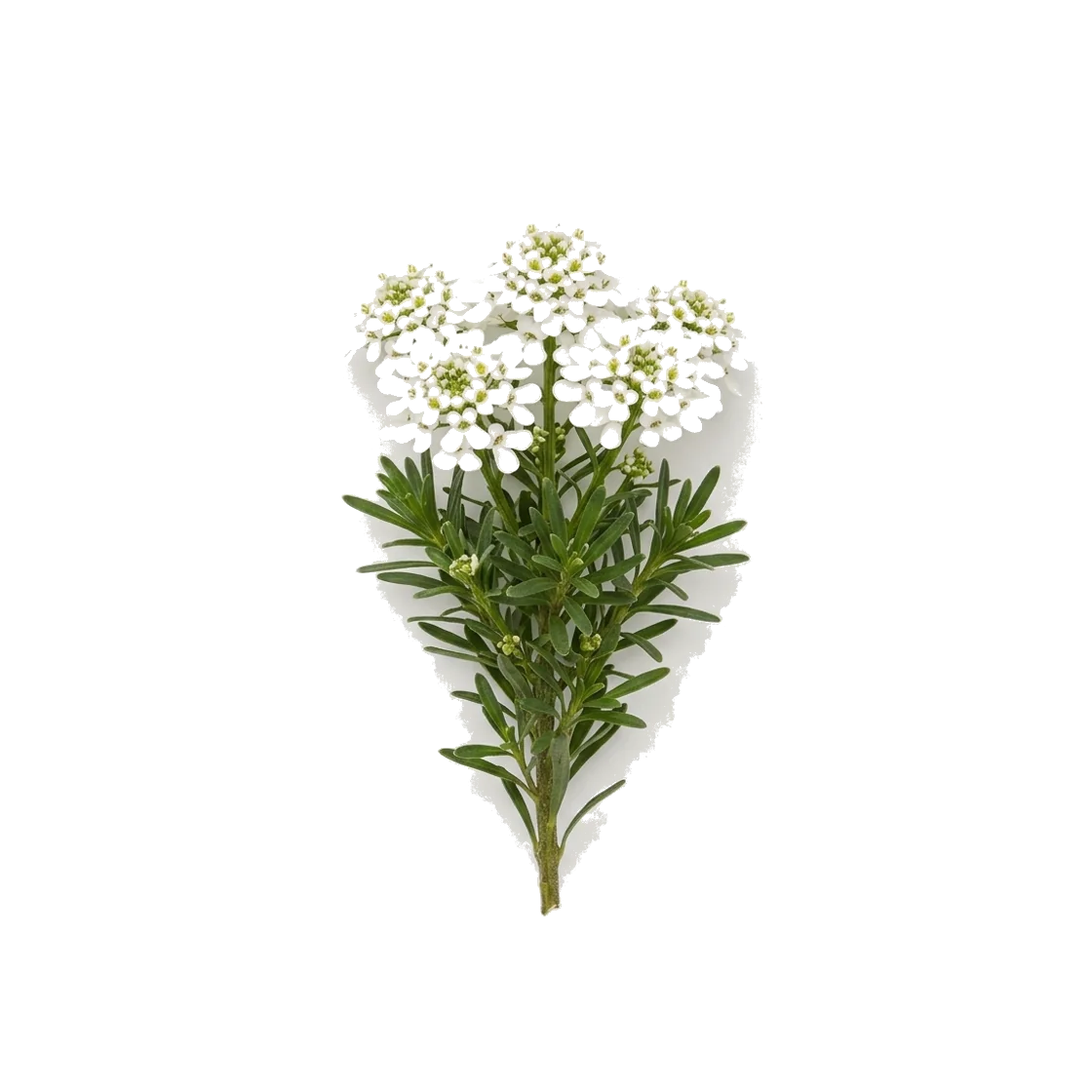
Evergreen candytuft (Iberis sempervirens) is a woody perennial subshrub native to southern Europe and the Mediterranean basin. It grows as a spreading, low-mounded groundcover reaching six to twelve inches in height, covered year-round with narrow, glossy, dark green foliage that forms neat cushions across rocky ground and garden borders.
In mid-to-late spring, the plant transforms into a dense blanket of brilliant, pure white flower clusters that almost completely hide the leaves beneath. It is an exceptional choice for rock gardens, edging sunny pathways, cascading over retaining walls, and filling outdoor containers, where its sparkling spring display also attracts bees and other beneficial pollinators.
Highly regarded for its durability and drought tolerance once established, evergreen candytuft asks for very little beyond open sunshine and sharp drainage. It handles cold temperate winters with ease and maintains attractive evergreen foliage throughout all four seasons, making it a reliable staple for resilient, water-wise landscapes.
Did you know?The genus name Iberis refers to the Iberian Peninsula, where many wild species of this brassica family member originated.
Care. What it needs, point by point.
- Watering
- Water moderately, allowing the top half of the soil to dry out completely before watering again. Established plants in ground beds are notably drought-tolerant, while container plants need watering once or twice weekly in warm weather without waterlogging.
- Light
- 6 h of direct sunPosition in full sun receiving at least six hours of direct sunlight each day for dense growth and abundant flowering. In partial shade, plants become leggy and produce noticeably fewer blooms.
- Temperature
- 12–24 °C ideal temperatureCandytuft is cold-hardy down to -15 °C (5 °F) and easily tolerates summer heat above 35 °C (95 °F). It performs best when active growth occurs between 12 °C and 24 °C (54 °F to 75 °F).
- Soil
- Plant in light, gritty, or sandy soil with excellent drainage and neutral to slightly alkaline pH. Heavy clay soils that retain moisture must be amended with grit or avoided to prevent root diseases.
- Fertilizer
- Feed with a light dose of balanced, slow-release fertilizer or finished compost in early spring before blooms open. Avoid fertilizers high in nitrogen, which encourage foliage growth at the expense of flowers.
- Pruning
- Shear the plant back by about one-third immediately after flowering finishes in late spring. This keeps the mound tight and bushy while preventing the central stems from becoming woody and bare.
- Propagation
- Propagate by taking semi-ripe stem cuttings in early summer and rooting them in gritty compost. It can also be grown from seed sown in spring or by dividing mature clumps in autumn.
Where it grows. In the wild and in homes.
In the wild it grows in Europe, temperate Asia, and Africa, in a temperate climate.
People have also taken it to 10 more regions where it now grows on its own: Europe, North America, and tropical Asia.
The Florami community has photographed it in España.
Range: Plants of the World Online, Royal Botanic Gardens, Kew
Is Evergreen candytuft toxic to cats and dogs?
The ASPCA doesn't list this species. If your pet has chewed it and seems unwell, call your vet.
Gallery As the community sees it.
Common problems What tends to go wrong.
- Root rot
- Overwatering
- Too little light
- Snails and slugs




Frequently asked questions What people ask most.
Why is my candytuft becoming woody and sparse in the center?
As candytuft matures, central stems naturally turn woody and flop open if left unpruned. Shearing the plant back by one-third right after flowering stimulates fresh, bushy basal growth.
Why is my evergreen candytuft not blooming?
Insufficient direct sunlight is the most common reason for sparse or failed flowering. Excess nitrogen fertilizer can also lead to lush leafy growth while preventing flower buds from developing.
Can evergreen candytuft survive cold winters outdoors?
Yes, it is an extremely hardy evergreen perennial that withstands sub-zero freezes across most temperate climates. In areas with wet, freezing conditions, ensuring good drainage is crucial to protect winter crown health.
How do I prevent root rot in candytuft?
Always provide porous, fast-draining soil and avoid overwatering. When growing in containers, ensure pots have drainage holes and never allow saucers to hold standing water.