Aluminium plant
Pilea cadierei
Aluminium plant (Pilea cadierei): complete guide to watering, light and propagation of the silver-patterned foliage houseplant. Growing tips.
- Light
- Indirect
- Watering
- 10–14days between waterings
- Temperature
- 15–25 °Cideal temperature
- Toxicity
- Non-toxic
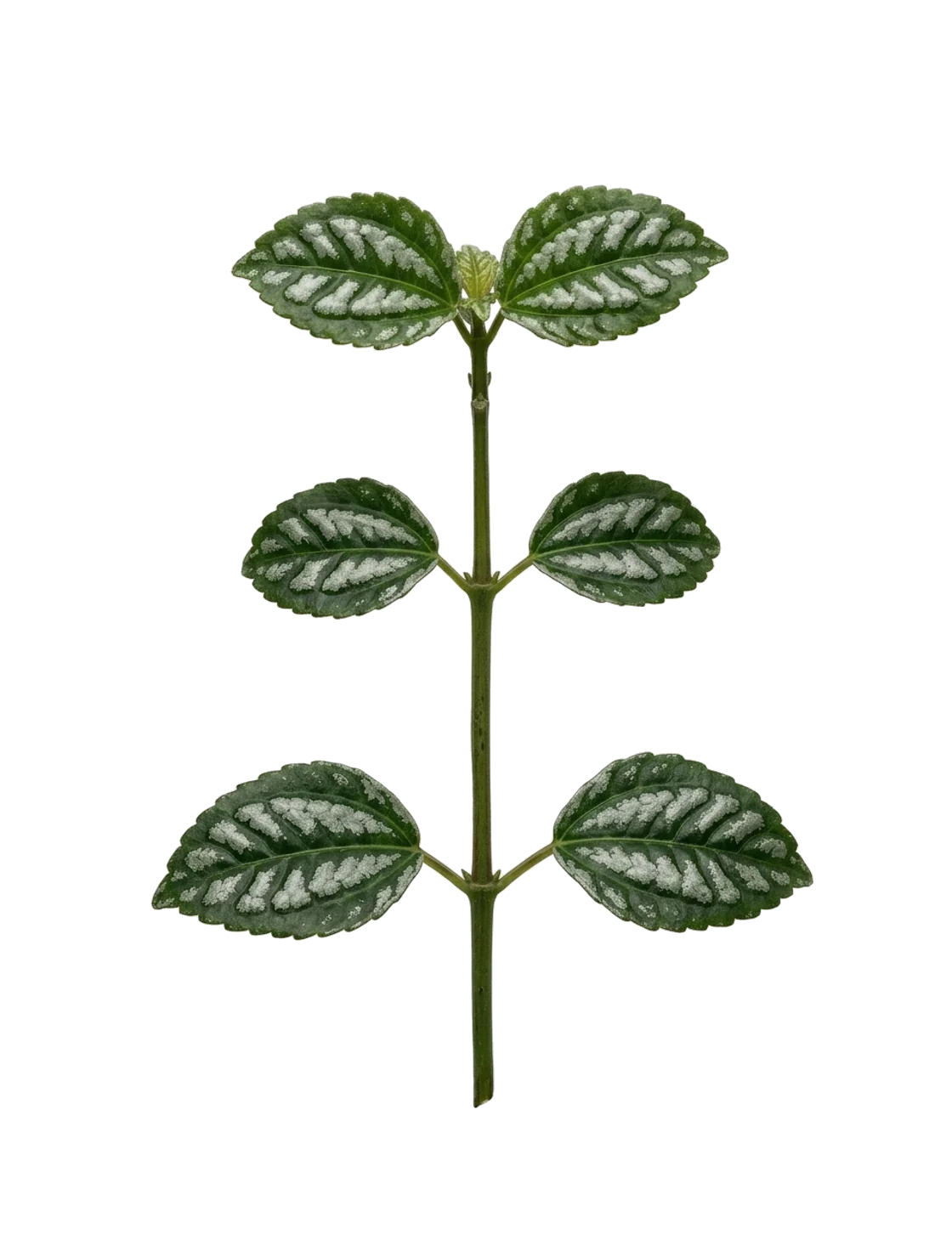
The aluminium plant (Pilea cadierei) is a bushy little plant from the tropical forests of Vietnam, famous for its quilted green leaves splashed with raised silver markings. It grows into a neat mound of about 30 centimetres, with upright stems that branch willingly when pinched. Few foliage plants give so much pattern for so little effort, which keeps it a classic beginner plant.
It comes from shady forest undergrowth, so it thrives in bright indirect light and even, moderate watering. The silver markings fade in strong sun and the stems stretch in dark corners, so finding a bright spot without direct midday sun is the whole secret. Like many pileas it dislikes wet feet: the top of the mix should dry slightly between waterings while the root ball never dries out completely.
With that routine it stays dense and colourful for years, though older stems can look bare with age and are best replaced by fresh cuttings. It enjoys normal household humidity and an occasional shower to wash dust off the leaves. Repot in spring when the roots fill the pot, and pinch regularly, since a hard prune in one go can leave it looking sparse.
Did you know?Each leaf carries raised silver patches along the veins, which is where the aluminium nickname comes from.
Care. What it needs, point by point.
- Watering
- 10–14 days between wateringsWater when the top couple of centimetres of mix are dry, typically weekly in summer and every 10 to 14 days in winter indoors. Water thoroughly and discard what drains into the saucer.
- Light
- IndirectIt likes bright, indirect light, for example a metre or two from a sunny window. Too much direct sun bleaches the silver pattern, while dim corners make it leggy.
- Temperature
- 15–25 °C ideal temperatureIt is comfortable between 15 and 25 °C and dislikes sudden cold: keep it above 12 °C. Keep it clear of cold draughts and hot air from heaters.
- Soil
- Use a fertile, well-drained universal mix with some perlite or coarse sand so it never gets waterlogged. A pot with drainage holes is essential.
- Fertilizer
- 2–4 weeks between feedsFeed with a balanced liquid fertiliser at half strength every two to four weeks in spring and summer. No feeding is needed in autumn and winter.
- Pruning
- Pinch out the stem tips in spring to encourage branching and keep the plant compact. Remove any bare, stretched stems at the base.
- Propagation
- Take stem cuttings of 8 to 10 centimetres in spring; they root readily in water within a couple of weeks. Pot them up once the roots are a few centimetres long.
Where it grows. In the wild and in homes.
In the wild it grows in China and Indochina, in a subtropical climate.
People have also taken it to 18 more regions where it now grows on its own: South and Central America and the Caribbean, the Pacific, North America, and tropical Asia.
Range: Plants of the World Online, Royal Botanic Gardens, Kew
Is Aluminium plant toxic to cats and dogs?
The ASPCA doesn't list this species. If your pet has chewed it and seems unwell, call your vet.
Common problems What tends to go wrong.
- Overwatering
- Too little light
- Spider mites
- Aphids




Frequently asked questions What people ask most.
How often should I water an aluminium plant?
Water when the top couple of centimetres feel dry, roughly weekly in summer and every 10 to 14 days in winter. Soak the root ball well each time and empty the saucer so the roots never stand in water.
Why is my pilea growing leggy with bare stems?
Long, bare stems almost always mean too little light, often combined with never having been pinched. Move it to a brighter indirect spot and pinch the tips to force side shoots.
Why are the silver markings fading?
Faded or bleached patches usually come from too much direct sun on the leaves. Move it a little further from the window or behind a sheer curtain and the new leaves will keep their contrast.
How do I propagate Pilea cadierei?
Snip 8 to 10 centimetre stem tips in spring and stand them in water; roots usually appear within two weeks. Pot up rooted cuttings in groups of three or four for a full plant from the start.
Why are the lower leaves dropping?
Some lower leaf drop on ageing stems is natural, but sudden shedding points to overwatering or a cold draught. Check the watering rhythm first and move it away from doors, windows and heaters.